
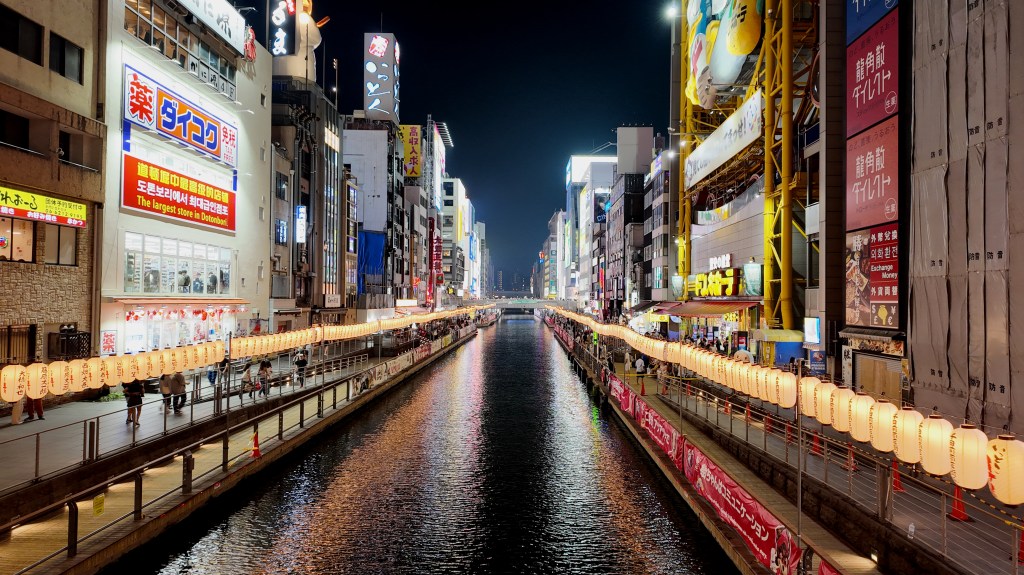
We’ve just returned from several weeks travelling through Osaka, Kyoto, Tokyo, Seoul and Doha. Five cities, dozens of meals, hundreds of supermarket shelves. And throughout the journey, one quiet challenge followed us everywhere: eating gluten-free in countries that aren’t built for it.
It’s easy to assume that advanced infrastructure means advanced food safety. But for anyone who needs to avoid gluten, whether due to coeliac disease or serious intolerance, the daily reality in these otherwise brilliant countries was far more complicated.
In fact, Doha stood out in an unexpected way. Labels were often clearer, allergen information was more accessible (especially in English), and there seemed to be a growing awareness of dietary needs. It wasn’t perfect, but it felt like a small moment of relief, a reminder that progress isn’t always where you expect it.
From the robotic cafés of Tokyo to the steaming alley kitchens of Seoul, the contrast between technological brilliance and allergy awareness was striking. And that contrast is where this article begins.
Between labelling and understanding, there’s a gap
In Japan and Korea, food is central to everything: identity, family, memory, ritual. And yet, when we tried to navigate those cultures as gluten-free travellers, we found ourselves standing in that uncomfortable space between admiration and anxiety.
At the core of the problem is something surprisingly simple: there is no shared language.
Ask a waiter in a family-run eatery if a dish contains gluten, and chances are they won’t know what you mean. Not because they don’t want to help, in fact, most people we met were gracious and genuinely concerned, but because the concept itself doesn’t register. You end up rephrasing: “Does it have wheat? Soy sauce? Flour?” And even then, clarity is never guaranteed.
Menus rarely mention allergens. Packaging is often in a single language. “Gluten-free” is a term that exists on paper, but doesn’t yet have a lived meaning in most everyday spaces.
The law provides some structure, but little certainty
On paper, both countries do have food labelling frameworks. In Japan, certain allergens (including wheat) must be disclosed on packaging. South Korea takes it further, requiring the listing of over 20 allergens. But these rules don’t extend to gluten as a whole, nor do they reliably account for cross-contamination, a key concern for anyone with coeliac disease.
And crucially, this information is almost always presented in the local language only. That makes grocery shopping feel like decoding, not deciding. Even in international supermarkets, there’s a reliance on guesswork: is this safe? Has anything been hidden behind a label we can’t read?
This wasn’t just frustrating. It was exhausting.
The places we avoided say as much as the ones we visited
In most cities, we skipped local street food entirely. Not because we didn’t want to try it, but because there was no realistic way to verify what was inside. We passed by noodle shops, tempura stalls, family-run canteens, all of them full of life, smell and colour, and moved on.
In restaurants that did look promising, we still had to make uncomfortable decisions. A place might advertise “no wheat flour” and still use soy sauce, or the same grill for all dishes. Staff did their best, but there was no training, no protocol. Just goodwill and hope.
The few safe spaces we found were either international cafés, high-end health food stores, or restaurants run by people who had lived abroad. That alone says a lot. Awareness comes with exposure. And in this case, it’s clear that the local demand for allergen-safe eating is only just beginning to emerge.
Culture plays a quiet but powerful role
There’s a reason why none of this is malicious. In Japan and Korea, coeliac disease is extremely rare. Some studies place prevalence at less than 0.1%, far lower than the European average. Without visible cases, there’s little pressure to adapt laws, and even less incentive for businesses to take initiative.
But rarity doesn’t mean irrelevance.
Millions of tourists arrive every year, families, children, older travellers, many of whom can’t afford a “maybe” when it comes to what’s on their plate. And within those countries, younger generations are beginning to explore gluten-free, dairy-free, and plant-based diets not just as trends, but as personal choices.
Right now, though, infrastructure hasn’t caught up. That means being gluten-free in Japan or Korea still feels like walking alone.
And perhaps one of the things that surprised us most during the trip was the contrast between the incredible modernity of the cities and the lack of basic awareness around food allergies. In Japan and Korea, where trains run to-the-second, robots bring your drinks, toilets outsmart your smartphone, and technology is woven into everyday life in ways Europe is still catching up with, it was startling to realise that the concept of food allergies remains largely unfamiliar.
Everything works beautifully. Everything is designed with care. But when you try to have a simple conversation about gluten, you quickly see that for most people, it’s simply not on the radar.
It wasn’t about poor service, quite the opposite! People were kind, thoughtful, and eager to help. But many had never even heard of coeliac disease. They didn’t understand why we were concerned about wheat in soy sauce, or why we couldn’t just “remove the noodles” from a bowl of ramen. In restaurants, it felt like we were introducing a concept that hadn’t yet been translated, not just linguistically, but culturally. Even in large supermarkets, staff were often unsure whether a product contained gluten or not.
It was a powerful reminder that being futuristic and being inclusive aren’t the same thing, and that even in the most advanced countries, there’s still a long way to go when it comes to awareness and support for dietary restrictions.
Europe has its flaws, but also its systems
Back home, things aren’t perfect but they’re at least consistent. In Spain and across the EU, allergen labelling is regulated. There are rules for what “gluten-free” means. Restaurants are increasingly trained to handle allergies, and consumers expect clear answers. It’s not just about legislation,it’s about awareness.
That contrast was striking throughout the trip. In Europe, you walk into a restaurant and there’s usually a sense that your needs will be understood. In Japan and Korea, you brace yourself for a conversation that may not happen.
What Aisee offers and why it matters now
This experience reinforced why we started building Aisee in the first place. Because safe eating shouldn’t depend on where you were born or what language you speak.
Our app doesn’t just scan labels, it reads real ingredients, recognises risk, and translates that into clear decisions, tailored to each user’s dietary needs. Whether you’re gluten-free, lactose-intolerant, halal, or vegan, Aisee lets you know where you stand, instantly and accurately.
And in places where regulation is uneven, or communication is difficult, that knowledge can make the difference between eating confidently and not eating at all.
We believe it’s not just travellers who benefit. Local citizens in Japan and Korea who want to explore new ways of eating, or who are beginning to suspect food sensitivities, also need tools. And so do restaurants, who may want to adapt but don’t know where to start.
Moving forward: visibility is part of safety
We’re not here to criticise. We fell in love with these countries. We’d go back tomorrow. But we also want to return to a world that’s a little more prepared.
A world where “gluten-free” doesn’t have to be explained three different ways. Where you don’t have to skip a meal because you can’t read a label. Where restaurants don’t just rely on your trust, they show they’ve earned it.
We’re building Aisee for that world. And this trip, with all its complexity, reminded us exactly why it’s needed.
 Choose Right, Eat Safe
Deja un comentario